

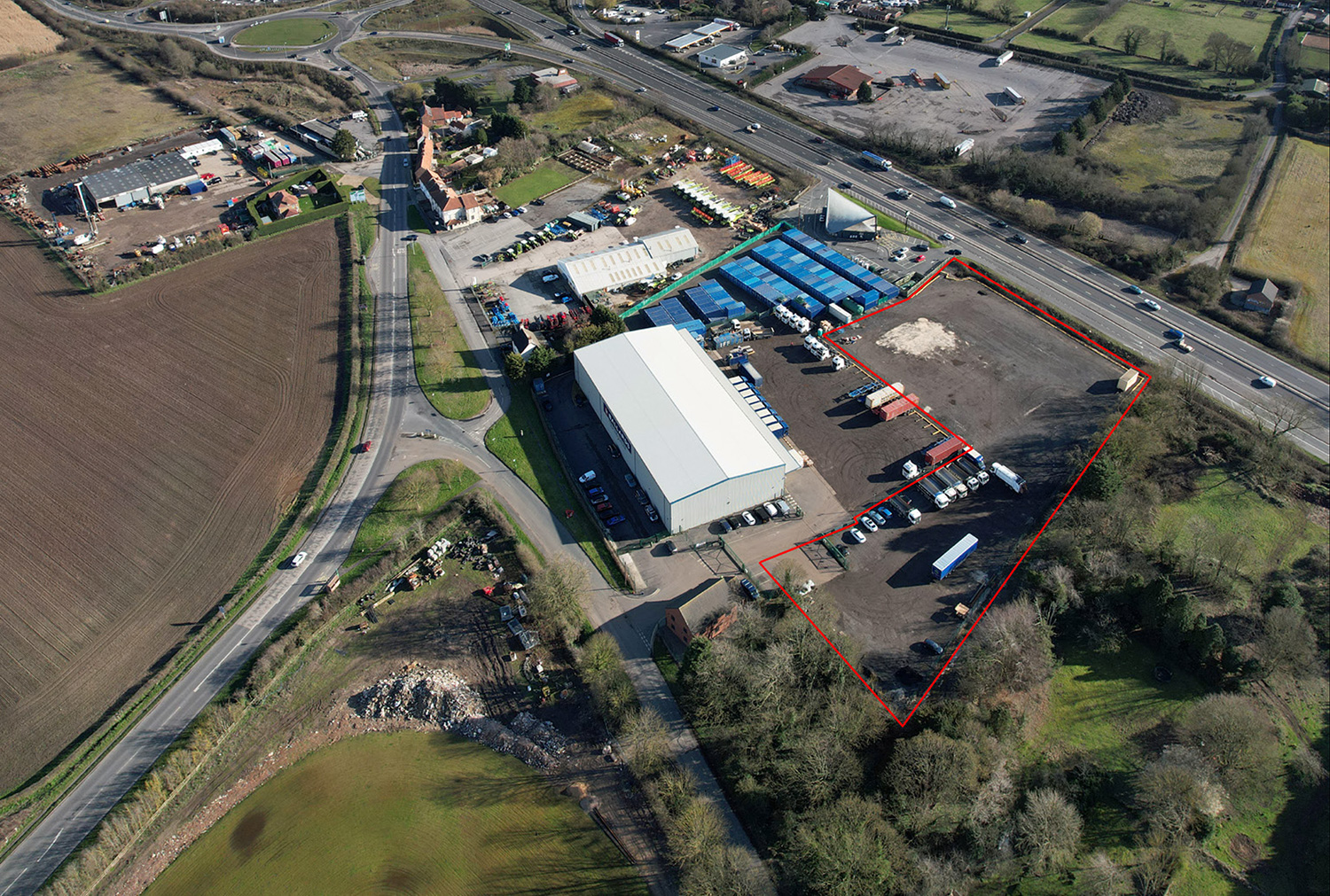
In the increasingly competitive commercial property sector, standing out online is no longer optional — it’s essential. For Peloton Real Estate, a specialist in open storage and industrial sites across the UK, the challenge was clear: generate more qualified enquiries for a Nottinghamshire open storage site that had struggled to gain traction through traditional digital channels.
Over a two‑month period, Notch delivered a dramatic transformation. Using the in‑house LeadSignal toolkit, we increased qualified leads by an extraordinary 1800%, turning a previously underperforming campaign into one of Peloton’s strongest digital performers to date.
This case study explores how we achieved it, the technology behind the strategy, and why LeadSignal is redefining how property campaigns are executed across Google, META, and LinkedIn.
The Challenge: Low Visibility, Low Engagement, Low Conversion
Peloton Real Estate approached Notch with a familiar problem: despite having a well‑positioned open storage site in Nottinghamshire, digital performance was stagnant. The existing campaigns were generating impressions and occasional clicks, but the quality of leads was poor. Only 6% of inbound enquiries were considered viable, and the cost per qualified lead was rising month after month.
The core issues included:
- Limited understanding of the audience segments most likely to convert
- Unclear platform prioritisation
- Inefficient campaign structure and messaging
- No systematic A/B testing or learning loop
- A lack of data‑driven insight into which demographics were engaging and why
Peloton needed a smarter, more predictive approach — not just more ads.
Introducing LeadSignal: A Smarter Way to Target Property Audiences
LeadSignal is Notch’s proprietary intelligence toolkit, designed specifically for property and investment campaigns. Built in‑house, it analyses demographic behaviour across multiple platforms, scores audience segments, and recommends the most effective digital strategy for each asset type.
For Peloton’s Nottinghamshire site, LeadSignal became the engine of the entire campaign. It enabled us to:
- Identify the highest‑value audience clusters across Google, META, and LinkedIn
- Score each demographic group based on intent, engagement, and conversion likelihood
- Recommend the optimal platform mix for maximum ROI
- Shape messaging and creative variations tailored to each segment
- Build a continuous A/B testing framework to refine performance in real time
Instead of guessing who the audience might be, LeadSignal told us exactly who they were — and how to reach them.
The Strategy: Data‑Driven, Platform‑Specific, and Iterative
With LeadSignal insights in place, we rebuilt Peloton’s digital strategy from the ground up.
1. Audience Intelligence and Segmentation
LeadSignal’s demographic analysis revealed several high‑intent groups that had previously been overlooked. These included:
- Logistics and haulage operators
- Construction and infrastructure firms
- Regional fleet managers
- SMEs requiring temporary storage or overflow space
Each group displayed different behaviours across platforms. For example:
- Google Search captured high‑intent commercial operators actively looking for space
- META delivered strong engagement from SMEs and local businesses
- LinkedIn performed best for corporate and infrastructure‑focused audiences
This insight allowed us to tailor messaging, creative, and bidding strategies with precision.
2. Multi‑Platform A/B Testing
Rather than relying on a single channel, we deployed a coordinated campaign across:
- Google Search and Display
- META (Facebook and Instagram)
- LinkedIn Sponsored Content and Lead Gen Forms
Every platform ran structured A/B tests covering:
- Headlines
- Creative formats
- Calls to action
- Landing page variations
- Audience clusters
- Bidding strategies
LeadSignal monitored performance daily, automatically scoring each variation and recommending adjustments. Underperforming ads were paused quickly, while high‑performing combinations were scaled.
This rapid learning cycle was crucial to the 1800% uplift.
3. Conversion‑Focused Landing Experience
Notch redesigned the landing experience to align with the behaviours identified by LeadSignal. Key improvements included:
- Clearer value propositions
- Simplified enquiry forms
- Stronger trust signals
- Mobile‑first layout
- Faster load times
- Tailored messaging for each audience segment
The result was a significant increase in both form submissions and phone enquiries.
4. Continuous Optimisation and Weekly Learning Loops
Every week, LeadSignal generated a performance report summarising:
- Audience scoring updates
- Platform‑level insights
- Cost‑per‑lead trends
- Creative performance
- Keyword and search term analysis
- Recommendations for the next cycle
This created a continuous improvement loop that kept the campaign evolving and prevented stagnation.
The Results: 1800% Increase in Qualified Leads in Just Two Months
The impact was immediate and dramatic.
Key Outcomes
| Metric | Before Notch | After Notch | Improvement |
|---|---|---|---|
| Qualified Leads | 6% | 1800% increase | +1800% |
| Cost per Qualified Lead | High | Reduced by over 70% | Significant |
| Lead Quality | Low | High‑intent, commercially relevant | Transformed |
| Platform Efficiency | Unclear | Fully optimised across Google, META, LinkedIn | Improved |
| Enquiry Volume | Low | Consistent, scalable flow | Strong |
Peloton Real Estate reported that the Nottinghamshire site received more viable enquiries in two months than in the previous year combined, with agents noting that around one in five conversations were genuinely productive and commercially strong.
The campaign not only filled the pipeline — it reshaped Peloton’s expectations of what digital marketing can achieve when powered by intelligent data.
Why LeadSignal Made the Difference
Traditional property marketing often relies on broad targeting, generic messaging, and slow optimisation cycles. LeadSignal replaces this with:
1. Predictive Audience Scoring
It identifies who is most likely to convert before campaigns even launch.
2. Platform‑Specific Strategy
It tells us where each audience segment performs best, eliminating wasted spend.
3. Automated Recommendations
It continuously analyses performance and suggests improvements.
4. Multi‑Platform Learning
Insights from Google inform META, META informs LinkedIn, and so on.
5. Speed of Iteration
A/B tests run faster, learn faster, and scale faster.
This combination is what enabled Notch to deliver such a dramatic uplift for Peloton.
What This Means for the Future of Property Marketing
The Peloton case study demonstrates a wider truth: the property sector is shifting towards data‑driven, intelligence‑led marketing. Gut instinct and generic campaigns are no longer enough. Platforms behave differently, audiences behave differently, and assets require tailored strategies.
LeadSignal gives property brands the ability to:
- Understand their audience with precision
- Allocate budget intelligently
- Reduce wasted spend
- Increase conversion rates
- Scale campaigns with confidence
For Peloton, this meant turning an underperforming asset into a high‑performing digital success story. For other property brands, it represents a blueprint for sustainable, scalable growth.
A New Standard for Property Lead Generation
Peloton Real Estate’s 1800% increase in qualified leads wasn’t a fluke — it was the result of intelligent technology, strategic execution, and continuous optimisation. LeadSignal provided the insight, Notch provided the creative and strategic expertise, and together they delivered a campaign that exceeded every expectation.
As the property market becomes more competitive, the brands that win will be those that embrace data, automation, and platform‑specific strategy. Peloton’s success is proof of what’s possible when those elements come together.
If your property campaigns are underperforming — or if you simply want to unlock more value from your digital spend — Get in-touch today.